Risk analysis of social forestry business management of national economic recovery program in the peatland of Central Kalimantan, Indonesia
DOI:
https://doi.org/10.18330/jwallacea.2022.vol11iss2pp181-192Keywords:
Agroforestry, covid 19, PEN and risk mapping, social forestryAbstract
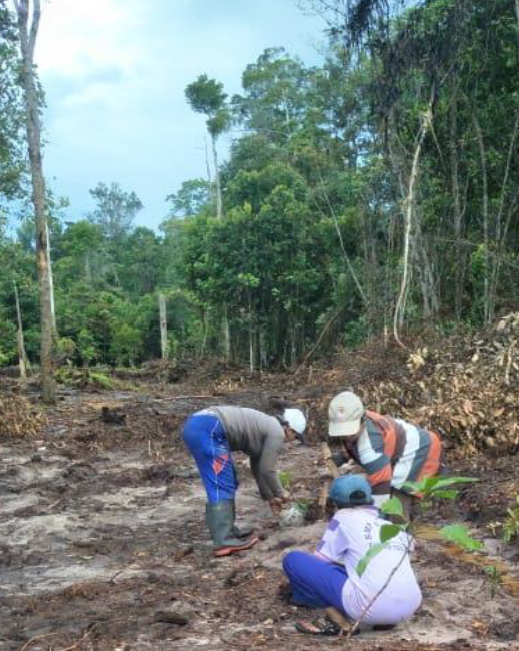
Indonesia is one of the countries in the world that has experienced a negative economic impact due to the Covid-19 pandemic since early 2020. In overcoming this impact, the government has taken strategic steps by implementing the National Economic Recovery (PEN) program. One of the PEN programs implemented by the Ministry of Environment and Forestry is community economic development for peat farmer groups through the development of agroforestry food in 35 Social Forestry Business Groups (KUPS) in Pulang Pisau Regency, Central Kalimantan Province. It is one of the regencies known to have quite a large peatland area in Indonesia. This study aimed to analyze the risk management of the 35 KUPS PEN program in peatland. A qualitative desk study methodology was used along with the fishbone model analysis. The results showed that various types of business activities had been developed by KUPS. In the management of social forestry businesses, various riskswere identified starting from regional governance, institutional governance,and business governance. The PEN program implemented in 2020 showed a positive impact in improving the community's economy with a positive impact on ecology and socio-culture. This PEN activity has absorbed around 9,110 HOK (Working People'sDay) local workers with 565 KUPS members. The implementation of this program can be replicated, especially forsocial forestry business groups in other areas.
References
Asaad, A. I. J., Asaf, R., Athirah, A., & Ratnawati, E. (2019). Analisis resiko produksi dan pendapatan pada usaha budi daya tambak udang windu di Kabupaten Kotabaru, Provinsi Kalimantan Selatan. Jurnal Sosial Ekonomi Kelautan dan Perikanan, 14(2), 125-134.
Aufar, A. F., & Raharjo, S. T. (2020). Kegiatan relaksasi sebagai coping stress di masa pandemi Covid-19. Jurnal Kolaborasi Resolusi Konflik, 2(2), 157-163.
Devy, J., Hasyim, A. I., & Situmorang, S. (2019). Analisis kelayakan finansial dan risiko usaha budidaya jamur tiram di Provinsi Lampung. Jurnal Ilmu-Ilmu Agribisnis, 6(4), 347-354.
Direktorat Jenderal Perhutanan Sosial dan Kemitraan Lingkungan, PSKL (2020). Rencana Strategis Direktorat Perhutanan Sosial dan Kemitraan Lingkungan 2020 –2024. Jakarta, September 2020.
Fauziyah, E. (2020). Model reduksi risiko kountur berdasarkan perilaku petani jagung di Pulau Madura. Analisis Kebijakan Pertanian, 18(1), 25-40.
Jusmalinda, & Asmin, F. (2020). Dampak pemberitaan penyebaran COVID-19 terhadap pengelolaan hutan Sumatera Barat. Jurnal Pembangunan Nagari, 5(1), 55-68.
Marginingsih, R. (2021).Program pemulihan ekonomi nasional sebagai kebijakan penanggulangan dampak pandemi Covid-19 pada sektor UMKM. Moneter: Jurnal Akuntansi dan Keuangan,8(2),110-116.
Nurdin, I. (2017). Mewujudkandesa maju reforma agraria. BHUMI: Jurnal Agraria Dan Pertanahan, 3(1), 82-97.
Nurhayati, A., Picalb, V., Efanic, A., Hilyaad, S., Salokoe, S., Made, S., & Purmono, A.H. (2020). Manajemen risiko perikanan tangkap (Studi kasus di tengah pandemi Covid-19). JFMR-Journal of Fisheries and Marine Research, 4(3), 417-427.
Rao, A., Lawrence,P. C.,Ismael,D., Robert,J.K., John,M., Farshad,R.,Phylis,F. S. (1996).Total Quality Management, A Cross Functional Perspective. New York, USA: John Wiley & Son
Rinaldi, I., Hanoum, S., & Sinansari, P. (2021).Identifikasi tingkat kematangan risiko di Badan Usaha Milik Negara (Studi kasus: Perum Jasa Tirta II). Jurnal Sains dan Seni, 10, 2337-3520.
Sari, C. I. (2022). Analisismanajemen resiko dengan pendekatan enterprise risk management pada UMKM makanan basah Kota Padang Panjang. Syntax Literate; Jurnal Ilmiah Indonesia, 7(2), 2770-2781.
Saputra, D. (2021). Survei BI : 87,5 Persen UMKM Indonesia Terdampak Pandemi Covid-19. Retrieved July 10, 2021, https://ekonomi.bisnis.com.
Sidik, M. A. M., & Fauziyah, E. (2021). Pengelolaan risiko pada usaha pengolahan kopi “Ud Princess” di Kabupaten Pamekasan. Jurnal Agribisnis Terpadu, 14(2), 257-278.
Sulistyo, A., & Putri, M. A. (2021). Analisis risiko produksi usaha sarang burung walet (Collacalia fuciphagus) di Kabupaten Tana Tidung. J-PEN Borneo : Jurnal Ilmu Pertanian, 4(1), 1-6.