
Heavy metals in mangrove sediments along the Selangor River, Malaysia
DOI:
https://doi.org/10.24259/fs.v3i2.6345Keywords:
Heavy metals, sediment, mangrove, Selangor River, contaminationAbstract
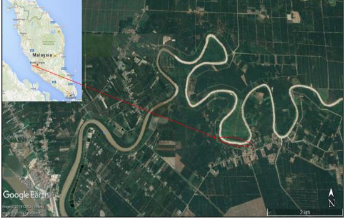
Mangroves are woody plants that grow at the interface between land and sea in tropical and subtropical latitudes where they exist in conditions of high salinity, extreme tides, strong winds, high temperature, and muddy anaerobic soils. The objectives of this study were to determine the selected heavy metals Copper (Cu), Zinc (Zn) and Lead (Pb) contamination in mangrove sediments at the Selangor River, Kampung Kuantan, Kuala Selangor, Selangor, Malaysia; and to compare heavy metals content in mangrove sediments between different plots and different sediment depths. Physical properties (sediment texture and sediment moisture) and chemical properties (pH water, electrical conductivity, and selected heavy metals) of sediments were determined by different plots and depths. The element of Pb was analyzed using the Inductively Coupled Plasma (ICP), whereas Cu and Zn using the Atomic Absorption Spectrometer (AAS). Data obtained were analyzed using the Statistical Analysis System (SAS) version 9.4 software. The results showed that the sediment texture was in the class of sandy clay, and soil moisture in all plots and at all depths were high. The contamination of sediment is affected by many factors, including soil pH and soil electrical conductivity. Cu, Zn and PB in sediment were determined around 1.00-10.60 mg/kg, 215.40-259.00 mg/kg and 18.83-28.59 mg/kg respectively, and were found to experience a significant difference between the plots, but not a significant difference between depths. The sediment in all plots and at all depths was contaminated with these heavy metals because of it being surrounded by residential and industrial areas, combined with particular recreational activities, agriculture and fishing along the Selangor River.References
Alongi, D. M. (2009). The Energetics of Mangrove Forest. Townsville: Springer Press.
Allen, V. B. & Pilbeam, D. J. (2007). Handbook of Plant Nutrition. Boca Raton: CRC Press.
Arya, L. M., & Paris, J. F. (1981). A physic empirical model to predict the soil moisture characteristic from particle-size distribution and bulk density data. Soil Science Society of America Journal, 45(6), 1023-1030.
Azlan, A., Aweng, E.R., Ibrahim, C.O., & Nooraidah, A. (2012). Correlation between Soil Organic Matter, Total Organic Matter and Water Content with Climate and Depths of Soil at Different Land use in Kelantan, Malaysia, Journal of Applied Sciences and Environmental Management, 16(4), 353-358.
Bouyoucos, G. J. (1962). Hydrometer Method Improved for Making Particle Size Analyses of Soils. Agronomy Journal, 54, 464-465. doi:10.2134/agronj1962.00021962005400050028x
Cavallo, M., Torras, X., Mascaró, O., & Ballesteros, E. (2016). Effect of temporal and spatial variability on the classification of the Ecological Quality Status using the CARLIT Index. MPB, 102(1), 122–127. https://doi.org/10.1016/j.marpolbul.2015.11.047
Chaiyara, R., Ngoendee, M., & Kruatrachue, M. (2013). Accumulation of Cd, Cu, Pb, and Zn in water, sediments, and mangrove crabs (Sesarma mederi) in the upper Gulf of Thailand. ScienceAsia, 39, 376–383. http://doi.org/10.2306/scienceasia1513-1874.2013.39.376
Chen, S.Y., & Lin, J.G. (2001). Bioleaching of Heavy Metals from Sediment: Significance of pH. Chemosphere, 44, 1093-1102.
Ellison, J. C. (1999). Impacts of Sediment Burial on Mangroves. Marine Pollution Bulletin, 37(8-12), 420-426. doi:DOI: 10.1016/S0025-326X(98)00122-2
Fomina, M., & Gadd, G. M. (2014). Biosorption: current perspectives on concept, definition and application. Bioresource Technology, 160, 3–14. https://doi.org/10.1016/J.BIORTECH.2013.12.102
Gruba, P., & Mulder, J. (2015). Tree species affect cation exchange capacity (CEC) and cation binding properties of organic matter in acid forest soils, Science of The Total Environment, 511, 655–662.
Islam, K. N. (2010). Heavy Metal Contamination and Sediment Quality. Dhaka: Lambert Academic Publishing.
Ismail, R. (2007). Distribution and Concentration of Heavy Metals and Polyaromatic Hydrocarbons in Surface Sediments of Kuala Sepetang, Perak. Serdang, Selangor. Universiti Putra Malaysia.
Lin, G., & Sternberg, L.D. (2005). Effects of Salinity Fluctuation on Photosynthetic Gas Exchange and Plant Growth of the Red Mangrove (Rhizophora mangle L.). Journal of Experimental Botany, 44, 9-16.
Lokman, H., & Yaakob, R. (1995), ‘Beach erosion variability during a northeast monsoon: The Kuala Setiu coastline, Terengganu, Malaysia’, Pertanika Journal of Science & Technology, 3(2), 337–348.
Mahmood, R., Leeper, R., & Quintanar, A. (2011). Sensitivity of planetary boundary layer atmosphere to historical and future changes of land use/land cover, vegetation fraction, and soil moisture in Western Kentucky, USA. Change, 78, 36–53.
Meerveld, H. J. T., & Mcdonnell, J. J. (2006). On the Interrelations between Topography, Soil Depth, Soil Moisture, Transpiration Rates and Species Distribution at the Hillslope Scale On the interrelations between topography, soil depth, soil moisture, transpiration rates and species distribution at the hillslope scale, (February). https://doi.org/10.1016/j.advwatres.2005.02.016
Montalvo, C., Aguilar, C. A., Amador, L. E., Cerón, J. G., Cerón, R. M., Anguebes, F., & Cordova, A. V. (2014). Metal contents in sediments (Cd, Cu, Mg, Fe, Mn) as indicators of pollution of Palizada River, Mexico, Environment and Pollution, 3(4): 89-98. http://dx.doi.org/10.5539/ep.
Mirnategh, S. B., Shabanipour, N., & Sattari, M. (2018). Seawater, Sediment and Fish Tissue Heavy Metal Assessment in Southern Coast of Caspian Sea. International Journal Of Pharmaceutical Research And Allied Sciences, 7(3), 116-125.
Nazir, R., Khan, M., Masab, M., Rehman, H.U., Rauf, N., Shahab, S.A., Ameer, N.T., Sajed, M., Ullah, M., Rafeeq, M., & Shaheen, Z. (2015). Accumulation of Heavy Metals (Ni, Cu, Cd, Cr, Pb, Zn, Fe) in the soil, water and plants and analysis of physico-chemical parameters of soil and water Collected from Tanda Dam Kohat. Department of Chemistry, 89-97.
Rahimah, A. (2012) Heavy metals distribution in water, sediment and aquatic species from Matang Mangrove Forest Reserve, Perak, Malaysia / Rahimah Abdullah. Masters thesis, University of Malaya.
Satrio, A. E., Gandaseca, S., Ahmed, O. H., Muhamad, N., & Majid, A. (2009). Influence of Chemical Properties on Soil Carbon Storage of a Tropical Peat Swamp Forest, (November), 1969–1973. https://doi.org/10.3844/ajassp.2009.1969.1972a
Siddique, M. D., Noor, E. A., Islam, M. D., Halim, A., Kamaruzzaman, M. D., Sultana, J., & Karim, D. (2014). Mapping of Site-Specific Soil Spatial Variability by Geostatistical Technique for Textural Fractions in a Terrace Soil of Bangladesh, Journal of Bioscience and Agriculture Research (JBAR), 1, 8–16.
Spiers, A.G. (1999). Review of international/ continental wetland resources. Global review of wetland resources and priorities for wetland inventory (ed. by C.M. Finlayson and A.G. Spiers). Supervising Scientist Report, 144, 63–104.
Stott, D.E., & J.P. Martin. (1989). Organic matter decomposition and retention in arid soils. Arid Soil Research and Rehabilitation. 3,115-148.
Tan, K. H. (2005). Soil Sampling, Preparation, and Analysis 2nd Edition. New York: CRC Press.
Tripathi, A., & Misra, D. R. (2012). A study of physico-chemical properties and heavy metals in contaminated soils of municipal waste dumpsites at Allahabad, India, 2(4), 2031–2040. https://doi.org/10.6088/ijes.00202030087
Webb, K. T., Wang, C., Astatkie, T., & Langille, D. R. (2014). Spatial and temporal trends in soil properties at a soil quality benchmark site in central Nova Scotia, (November 2000). https://doi.org/10.4141/S99-104
Zotarelli, L., Dukes, M. D., and Morgan, K. T. (2010). Interpretation of soil moisture content to determine soil field capacity and avoid over-irrigating sandy soils using soil moisture sensors. IFAS Publication AE460. Gainesville: University of Florida Cooperative Extension Service. http://edis.ifas.ufl.edu/ae460
Additional Files
Published
Versions
- 2019-10-30 (2)
- 2019-10-30 (1)
License
Copyright (c) 2019 Forest and Society

This work is licensed under a Creative Commons Attribution 4.0 International License.
This is an open access journal which means that all contents is freely available without charge to the user or his/her institution. Users are allowed to read, download, copy, distribute, print, search, or link to the full texts of the articles in this journal without asking prior permission from the publisher or the author. This is in accordance with the BOAI definition of open access.
Submission of an article implies that the work described has not been published previously (except in the form of an abstract or as part of a published lecture or academic thesis), that it is not under consideration for publication elsewhere, that its publication is approved by all authors and tacitly or explicitly by the responsible authorities where the work was carried out, and that, if accepted, will not be published elsewhere in the same form, in English or in any other language, without the written consent of the Publisher. An article based on a section from a completed graduate dissertation may be published in Forest and Society, but only if this is allowed by author's(s') university rules. The Editors reserve the right to edit or otherwise alter all contributions, but authors will receive proofs for approval before publication.
Forest and Society operates a CC-BY 4.0 © license for journal papers. Copyright remains with the author, but Forest and Society is licensed to publish the paper, and the author agrees to make the article available with the CC-BY 4.0 license. Reproduction as another journal article in whole or in part would be plagiarism. Forest and Society reserves all rights except those granted in this copyright notice