
Potential of Agroforestry Practices in Multifunctional Landscapes for Enhancing the Livelihoods of Local Dwellers in the North-Western Charlands of Bangladesh
DOI:
https://doi.org/10.24259/fs.v8i1.26769Keywords:
Agroforestry, Charland, Sustainable livelihood, Multifunctional landscape, Climate resilienceAbstract
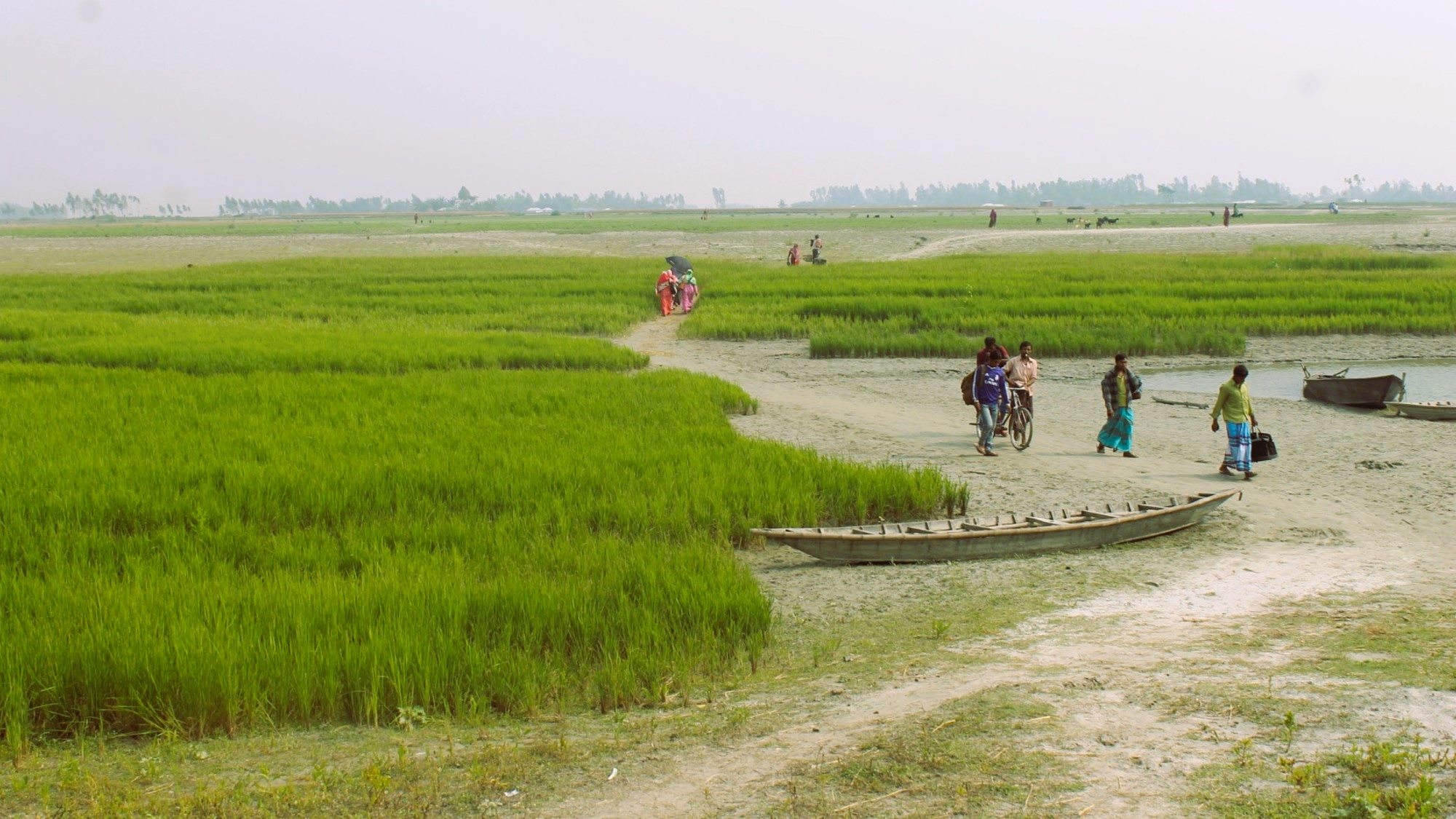
Char is any accretion in a river course that extends or establishes new land. A well-planned integrated land-use system combining woody perennials (agroforestry) can ensure sustainable, environmentally friendly climate resilience land-use systems and livelihood options on charland. To date, no systemic investigation of charland land agroforestry has been undertaken. A comprehensive study of the potential of agroforestry systems in charland areas was conducted using qualitative and quantitative methodologies. Two methods were employed: structured questionnaire interviews and botanical surveys. Findings revealed that considerable variation exists in both charland and mainland areas in terms of socio-demographic characteristics. Both tree and agroforestry knowledge of mainland farmers is greater than that of charland farmers. Charland dwellers sell almost all their farm products, while most mainland farmers consume their products. Agroforestry-related communication between extension workers and farmers is limited in both ecosystems. However, farmer interaction with extension workers is far less common in charland areas. Mainland farmers are satisfied with their homestead production systems, whereas cha land farmers face huge problems with the free grazing of cattle and goats. Mainland farmers think quality planting materials and fencing systems are key issues. Leafy short-rotation vegetables and climbing vegetables are more common in charlands. Other common marketable vegetables are tomato, brinjal, carrot, cauliflower, and cabbage. All fruit trees common on charland are more frequently found in the mainland areas. In the case of timber, eucalyptus (Eucalyptus camaldulensis) is more common on charland, whereas mahogany (Swietenia macrophylla) frequency is higher in the mainland. Medicinal trees are uncommon in both ecosystems except for neem (Azadirachta indica). Through proper training and motivation of farmers, there is a vast scope to increase tree and vegetable diversity in charland farms.
References
Alam, M. (2012). Valuation of tangible benefits of a homestead agroforestry system: a case study from Bangladesh. Human Ecology, 40(4), 639–645. https://doi.org/ 10.1007/s10745-012-9512-5
Arifur, R. M., & Munsur, M. R. (2011). Resource and livelihood practices of Char Dwellers: A case study of an attached char. In Proceedings of the 3rd International conference on water and flood management, ICWFM-2011, Dhaka, Swasti Printers Nilkhet (Vol. 1, pp. 207-213).
Bangladesh Bureau of Statistics (BBS). (2022). Statistical yearbook of Bangladesh 2007. Statistics Division, Ministry of Planning, Government of the People’s Republic of Bangladesh.
Bangladesh Planning Commission. (2022). Overview of BDP 2100. Bangladesh Planning Commission. Retrieved from https://bdp2100kp.gov.bd/BDP2100/Overview
Baqee, M. A. (1993). The settlement process in the char-lands [Doctoral Dissertation (Unpublished)]. University of Dhaka.
Bari, S. Md. (2019). Agroforestry as a multifunctional landscaping tool in the charland area of Bangladesh. AgriFoSe2030 Brief. Swedish University of Agricultural Sciences (SLU).
Carandang, W. M., Tolentino Jr, E. L., & Roshetko, J. M. (2006). Smallholder tree nursery operations in southern Philippines—supporting mechanisms for timber tree domestication. Forests, Trees and Livelihoods, 16(1), 71-83. https://doi.org/ 10.1080/14728028.2006.9752546
Chakraborty, M., Haider, M. Z., & Rahaman, M. M. (2015). Socio-economic impact of cropland agroforestry: evidence from Jessore district of Bangladesh. International Journal of Research in Agriculture and Forestry, 2(1), 11-20.
Chen, M., Atiqul Haq, S. M., Ahmed, K. J., Hussain, A. B., & Ahmed, M. N. Q. (2021). The link between climate change, food security and fertility: The case of Bangladesh. PLoS One, 16(10), e0258196. https://doi.org/10.1371/journal.pone.0258196
Chowdhury, M. (2000). An assessment of flood forecasting in Bangladesh: The experience of the 1998 flood. Natural Hazards, 22, 139-136. https://doi.org/ 10.1023/A:1008151023157
Chowdhury, M. K. (1997). Agroforestry in homesteads and croplands: existing practices and potentials. In M. K. Alam, F. U. Ahmed, & S. M. R. Amin (Eds.), Agroforestry: Bangladesh perspectives (pp. 68–84). Bangladesh Agricultural Research Council.
Cochran, W. G. (1977). Sampling Techniques (3rd Edition). John Wiley & Sons.
DFID (Department for International Development). (2000). Sustainable rural livelihood. DFID (Department for International Development).
Government of Bangladesh (GOB). (2017). Bangladesh Delta Plan 2100 (Draft). General Economics Division, Bangladesh Planning Commission. Retrieved from http://www.lged.gov.bd/UploadedDocument/UnitPublication/17/624/Bangladesh%20Delta%20Plan%202100%20Draft%20Report.pdf
Government of Bangladesh (GOB). 2018). Bangladesh Delta Plan 2100 (abridged version). General Economics Division, Bangladesh Planning Commission.
Hailemichael, S., & Haug, R. (2020). The use and abuse of the ‘model farmer’approach in agricultural extension in Ethiopia. The Journal of Agricultural Education and Extension, 26(5), 465-484. https://doi.org/10.1080/1389224X.2020.1757475
Hanif, M. A., Roy, R. M., Bari, M. S., Ray, P. C., Rahman, M. S., & Hasan, M. F. (2018). Livelihood improvements through agroforestry: Evidence from Northern Bangladesh. Small-scale Forestry, 17, 505-522. https://doi.org/10.1007/s11842-018-9400-y
Hasanuzzaman, M., & Hossain, M. (2015). Leaf litter decomposition and nutrient dynamics associated with common cropland agroforest timber tree species of Bangladesh. International Journal of Forest Research, 61(2), 125–139. https://doi.org/10.1155/2014/805940
Hasanuzzaman, M., Hossain, M., & Saroar, M. (2014). Floristic composition and management of cropland agroforest in southwestern Bangladesh. Journal of forestry research, 25(3), 597-604. https://doi.org/10.1007/s11676-014-0451-4
Hossain, M. R., & Khan, M. A. (2023). Impact of Household Interventions on Homestead Biodiversity Management and Household Livelihood Resilience: An Intertemporal Analysis from Bangladesh. Small-scale Forestry, 22, 481-510. https://doi.org/ 10.1007/s11842-023-09540-4
Islam, M. S., Sultana, S., & Miah, M. A. (2014). Adaptation of char livelihood in flood and river erosion areas through indigenous practice: a study on Bhuapur Riverine Area in Tangail. Journal of Environmental Science and Natural Resources, 7(1), 13-19. http://dx.doi.org/10.3329/jesnr.v7i1.22138
Islam, S. N. (2000). Char people, living with the Padma River and fragile environment: char study report March 2000 (Unpublished report). Gono Unnayan Prochesta (GUP).
Islam, S. N. (2003). Banglapedia: National Encyclopedia of Bangladesh. Asiatic Society of Bangladesh.
Islam, S. N., Roh, E., & Ashraf, D. (2011). Char-lands Development Policy for Livelihoods Sustainability in the Padma River Basin in Ganges Delta in Bangladesh. KAPS International Conference, pp. 349-3969.
Jannat, A., & Uddin, M. T. (2016). Farmers perception about one house one farm project and its impact on enterprise profitability in selected areas of Mymensingh district. The Agriculturists, 14(1), 43-53. https://doi.org/10.3329/agric.v14i1.29099
Kallio, M. H., Kanninen, M., & Krisnawati, H. (2012). Smallholder teak plantations in two villages in Central Java: silvicultural activity and stand performance. Forests, Trees and Livelihoods, 21(3), 158–175. https://doi.org/10.1080/14728028. 2012.734127
Kewessa, G. (2020). Homegarden agroforestry as a tool for sustainable production unit in Ethiopia. Journal of Resources Development and Management, 67, 14-19. http://dx.doi.org/10.7176/JRDM/67-02
Khan, M. A. H., Ali, M. Y., Quayyum, M. A., Nazrul, M. I., & Hossain, M. J. (2009). Year round homestead vegetable production: a means of reducing poverty and nutritional deficiency for small farm. Bangladesh Journal of Agricultural Research, 34(1), 169-174. http://dx.doi.org/10.3329/bjar.v34i1.5767
Lein, H. (2000). Hazards and 'forced' migration in Bangladesh. Norsk Geografisk Tidsskrift-Norwegian Journal of Geography, 54(3), 122-127. https://doi.org/ 10.1080/002919500423735
Martini, E., Roshetko, J. M., & Paramita, E. (2017). Can farmer-to-farmer communication boost the dissemination of agroforestry innovations? A case study from Sulawesi, Indonesia. Agroforestry Systems, 91, 811-824. https://doi.org/10.1007/s10457-016-0011-3
Michon, G., & Mary, F. (1994). Conversion of traditional village gardens and new economic strategies of rural households in the area of Bogor, Indonesia. Agroforestry Systems, 25, 31-58. https://doi.org/10.1007/BF00705705
Ministry of Agriculture of Bangladesh. (2018). National Agriculture Policy 2018. Ministry of Agriculture of Bangladesh, English version. Retrieved from https://moa.gov.bd/site/view/policies/Policies
Nyoka, B. I., Roshetko, J., Jamnadass, R., Muriuki, J., Kalinganire, A., Lillesø, J. P. B., ... & Cornelius, J. (2015). Tree seed and seedling supply systems: a review of the Asia, Africa and Latin America models. Small-scale Forestry, 14, 171-191. https://doi.org/10.1007/s11842-014-9280-8
Rahman, M. H., Uddin, M. N., & Khan, M. (2018). Communication Behaviour of Farmers with the Agricultural Extension Agents Using Cell Phone: A Case of Bangladesh. International Journal of Agricultural Science, Research and Technology in Extension and Education Systems (IJASRT in EES), 8(3), 121-127.
Rahman, M. S., Rahman, J., Saifullah, M., Jewel, K. N. A., & Yasmine, M. (2021). Exploring improved agroforestry practiced farmer’s socio-demographic characteristics and their livelihood in selective charlands of Bangladesh. Social Values and Society (SVS), 3(2), 54-57. http://doi.org/10.26480/svs.02.2021.54.57
Rahman, M. T. (2017). Role of agriculture in Bangladesh economy: uncovering the problems and challenges. International Journal of Business and Management Invention, 6(7), 36-46.
Rahman, S. A., Imam, M. H., Snelder, D. J., & Sunderland, T. (2012). Agroforestry for livelihood security in Agrarian landscapes of the Padma floodplain in Bangladesh. Small-scale Forestry, 11, 529-538. https://doi.org/10.1007/s11842-012-9198-y
Rahman, S. A., Sunderland, T., Kshatriya, M., Roshetko, J. M., Pagella, T., & Healey, J. R. (2016). Towards productive landscapes: Trade-offs in tree-cover and income across a matrix of smallholder agricultural land-use systems. Land Use Policy, 58, 152-164. https://doi.org/10.1080/14728028.2008.9752629
Rahman, S. A., Sunderland, T., Roshetko, J. M., & Healey, J. R. (2017). Facilitating smallholder tree farming in fragmented tropical landscapes: Challenges and potentials for sustainable land management. Journal of environmental management, 198, 110-121. https://doi.org/10.1016/j.jenvman.2017.04.047
Rajendren, K., & Mohan, E. (2014). Tree species with potential of nitrogen fixation in agroforestry system adopted by farmers in semi-arid region of Southern India. Biological Research Bulletin, 3, 1-4.
Rice, R. A., & Greenberg, R. (2000). Cacao cultivation and the conservation of biological diversity. AMBIO: A Journal of the Human Environment, 29(3), 167-173. https://doi.org/10.1579/0044-7447-29.3.167
Roshetko, J. M. (2001). Agroforestry species and technologies: a compilation of the highlights and factsheets published by NFTA and FACT Net 1985-1999. Taiwan Forestry Research Institute and Council of Agriculture, Taiwan, Republic of China and Winrock International, Morrilton, Arkansas, USA.232 p.
Roshetko, J. M., M Delaney, K Hairiah, and P Purnomosidhi. (2002). Carbon stocks in Indonesian homegarden systems: Can smallholder systems be targeted for increased carbon storage? American Journal of Alternative Agriculture, 17, 138-148.
Roshetko, J. M., Pingault, N., Quang Tan, N., Meybeck, A., Matta, R., & Gitz, V. (2022). Asia-Pacific roadmap for innovative technologies in the forest sector. Food and Agriculture Organization of the United Nations (FAO), Center for International Forestry Research (CIFOR), CGIAR Research Program on Forests, Trees and Agroforestry (FTA). https://doi.org/10.17528/cifor/008515
Sabastian, G., Kanowski, P., Race, D., Williams, E., & Roshetko, J. M. (2014). Household and farm attributes affecting adoption of smallholder timber management practices by tree growers in Gunungkidul region, Indonesia. Agroforestry Systems, 88, 257-268. https://doi.org/10.1007/s10457-014-9673-x
Sanz, M. J., De Vente, J. L., Chotte, J.-L., Bernoux, M., Kust, G., Ruiz, I., Almagro, M., Alloza, J. A., Vallejo, R., Castillo, V., Hebel, A., & Akhtar-Schuster, M. (2017). Sustainable land management contribution to successful land-based climate change adaptation and mitigation: A report of the Science-Policy Interface. Bonn: UNCCD. ISBN 978-92-9511-095-3.
Saha, S. M., Pranty, S. A., Rana, M. J., Islam, M. J., & Hossain, M.
E. (2022). Teaching during a pandemic: do university teachers prefer online teaching? Heliyon, 8(1), e08663. https://doi.org/10.1016/j.heliyon.2021.e08663
Sanz, M. J., De Vente, J., Chotte, J. L., Bernoux, M., Kust, G., Ruiz, I., ... & Akhtar-Schuster, M. (2017). Sustainable land management contribution to successful land-based climate change adaptation and mitigation: A report of the science-policy interface. United Nations Convention to Combat Desertification (UNCCD).
Sarker, M. H. (2008). Morphological response of the Brahmaputra-Padma-lower Meghna River system to the Assam Earthquake of 1950 [Doctoral Dissertation (Unpublished)]. University of Nottingham.
Sarmin, S., & Hasan, M. F. (2020). Constraints faced by the small-scale farmers in achieving household food security: A case from Dinajpur district, Bangladesh. Bangladesh Journal of Extension Education, 32(1), 63-72. http://dx.doi.org/ 10.5281/ZENODO.7229679
Sollen-Norrlin, M., Ghaley, B. B., & Rintoul, N. L. J. (2020). Agroforestry Benefits and Challenges for Adoption in Europe and Beyond. Sustainability, 12(17), 7001. https://doi.org/10.3390/su12177001
Subedi, B. P. (2016). Using Likert type data in social science research: Confusion, issues and challenges. International Journal of Contemporary Applied Sciences, 3(2), 36–49.
Tscharntke, T., Clough, Y., Bhagwat, S. A., Buchori, D., Faust, H., Hertel, D., ... & Wanger, T. C. (2011). Multifunctional shade‐tree management in tropical agroforestry landscapes–a review. Journal of Applied Ecology, 48(3), 619-629. https://doi.org/ 10.1111/j.1365-2664.2010.01939.x
Ullah, H., Islam, M. N., & Malak, M. A. (2010). Charland dynamics of the Brahmaputra-Jamuna river in Bangladesh. Jahangirnagar Review Part II: Social Science, 167-184. http://dx.doi.org/10.13140/RG.2.1.3324.3282
Wanjira, E. O., Muriuki, J., & Ojuok, I. (2020). Farmer Managed Natural Regeneration in Kenya: A primer for development practitioners. CGIAR. Retrieved from http://apps.worldagroforestry.org/downloads/Publications/PDFS/B20069.pdf
Yasmin, R., Wadud, M. A., Mandol, M. M. A., & Sharif, M. O. (2010). Tree diversity in the homestead and cropland areas of Madhupur Upazila under Tangail District. Journal of Agroforestry and Environment, 4(1), 89-92
Additional Files
Published
License
Copyright (c) 2024 Forest and Society

This work is licensed under a Creative Commons Attribution 4.0 International License.
This is an open access journal which means that all contents is freely available without charge to the user or his/her institution. Users are allowed to read, download, copy, distribute, print, search, or link to the full texts of the articles in this journal without asking prior permission from the publisher or the author. This is in accordance with the BOAI definition of open access.
Submission of an article implies that the work described has not been published previously (except in the form of an abstract or as part of a published lecture or academic thesis), that it is not under consideration for publication elsewhere, that its publication is approved by all authors and tacitly or explicitly by the responsible authorities where the work was carried out, and that, if accepted, will not be published elsewhere in the same form, in English or in any other language, without the written consent of the Publisher. An article based on a section from a completed graduate dissertation may be published in Forest and Society, but only if this is allowed by author's(s') university rules. The Editors reserve the right to edit or otherwise alter all contributions, but authors will receive proofs for approval before publication.
Forest and Society operates a CC-BY 4.0 © license for journal papers. Copyright remains with the author, but Forest and Society is licensed to publish the paper, and the author agrees to make the article available with the CC-BY 4.0 license. Reproduction as another journal article in whole or in part would be plagiarism. Forest and Society reserves all rights except those granted in this copyright notice