
Why Does Tobacco Agriculture in Thailand Persist?
DOI:
https://doi.org/10.24259/fs.v5i2.13587Keywords:
Tobacco control, Tobacco agriculture, Tobacco farmer, Roll-your-own cigarettes, ThailandAbstract
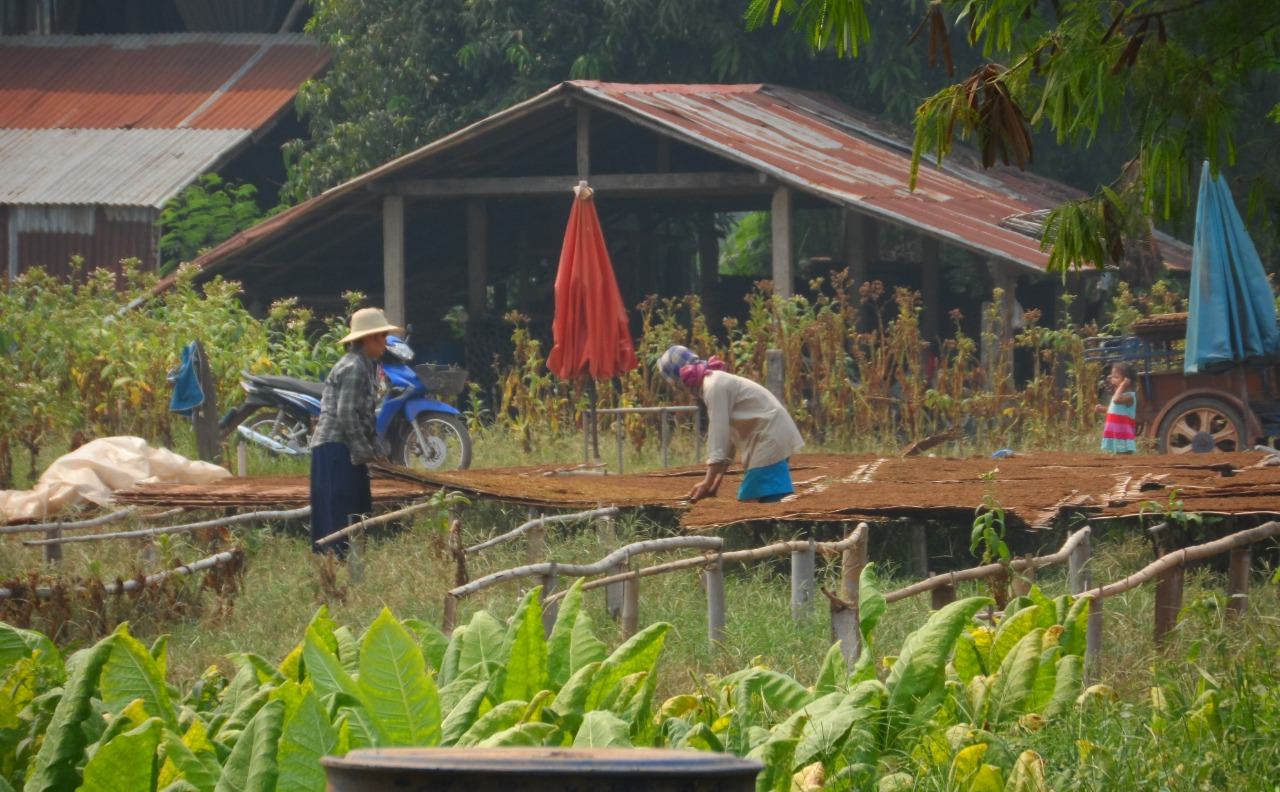
The rigorous tobacco controls advocated by both international policy players and national government are foreseen to lowering demand in tobacco consumption, and consequently, the contraction of tobacco agriculture. This paper seeks to reveal why tobacco agriculture, albeit with the declining trend of tobacco farms, continues to persist. Theoretical guiding the investigation is based on the institutional arrangement of contract farming system, the idea that derived from New Institution Economics, and farmers’ striving to attain livelihoods. The study adopts qualitative methods, utilising purposive sampling, with 53 tobacco farmers recruited from four provinces, namely Phrae, Phetchabun, Roi-et and Nongkhai, who took part in four focus group discussions. In addition, in-depth interviews were conducted with two provincial agricultural promotion officers, three provincial excise officers and four staff members of the local office of the Thailand Tobacco Monopoly. The data was analysed using content analysis. This paper found that supportive institutional arrangements, the adaptation of communities and households creating a favourable environment and the emergence of new markets for roll-your-own cigarettes are contributing to the persistence of tobacco agriculture. In light of tobacco control, two policy measures are proposed. First, the regulations for roll-your-own cigarette industries – both smallholders and manufacturers – must be revised and instituted. Second, to encourage tobacco farmers to move away from tobacco growing, institutional support for alternative crops, such as price guarantees, inputs and technical support should be provided in the same manner that the tobacco growers currently receive.
References
ADB. (2008). Asian Development Bank: Annual Report 2008. Retrieved from https://www.adb.org/sites/default/files/institutional-document/31323/annual-report-2008-vol01.pdf
Appau, A., Drope, J., Witoelar, F., Chavez, J. J., & Lencucha, R. (2019). Why do farmers grow tobacco? A qualitative exploration of farmers perspectives in Indonesia and Philippines. International Journal of Environmental Research and Public Health, 16(13), 2330. https://doi.org/10.3390/ijerph16132330
Arthur, W. B. (1989). Competing technologies, increasing returns, and lock-in by historical events. The Economic Journal, 99(394), 116-131. https://doi.org/10.2307/2234208
Aungkulanon, S., Pitayarangsarit, S., Bundhamcharoen, K., Akaleephan, C., Chongsuvivatwong, V., Phoncharoen, R., & Tangcharoensathien, V. (2019). Smoking prevalence and attributable deaths in Thailand: predicting outcomes of different tobacco control interventions. BMC Public Health, 19(1), 1-11. https://doi.org/10.1186/s12889-019-7332-x
Barraclough, S., & Morrow, M. (2017). Tobacco and the Malays: ethnicity, health and the political economy of tobacco in Malaysia. Ethnicity & Health, 22(2), 130–144. https://doi.org/10.1080/13557858.2016.1244620
Bernstein, H. (2001). The Peasantry in Global Capitalism: Who, Where and Why. Socialist Register, 37, 25-51.
Carney, D., Drinkwater, M., Rusinow, T., Neefjes, K., Wanmali, S., & Singh, N. (1999). Livelihoods approaches compared: a brief comparison of the livelihoods approaches of the UK department for international development (DFID). CARE, Oxfam and the United Nations Development Programme (UNDP), London.
Castleberry, A., Nolen, A., 2018. Thematic analysis of qualitative research data: is it as easy as it sounds? Currents in Pharmacy Teaching and Learning, 10(6), 807–815. https://doi.org/10.1016/j.cptl.2018.03.019
Centers for Disease Control and Prevention (CDC) (2012). Current cigarette smoking among adults - United States. Morbidity and Mortality Weekly Report, 61(44), 889–894.
Chambers, R., & Conway, G.R. (1991). Sustainable rural livelihoods: practical concepts for the 21st century. IDS Discussion Paper 296. Institute of Development Studies.
Chantornvong, S., & McCargo, D. (2001). Political economy of tobacco control in Thailand. Tobacco Control, 10(1), 48-54. http://dx.doi.org/10.1136/tc.10.1.48
Chitanondra, H. (2005). Knowledge Package #1: Be Aware the Cheats of Tobacco Multinational Corporations. Thai Health Foundation.
Choenkwan, S., & Fisher, M. (2018). Introduction to the special section: Agrarian transformation in Thailand - Commodities, landscapes, and livelihoods. Forest and Society, 2(2), 112-120. http://dx.doi.org/10.24259/fs.v2i2.5356
Cholwatanapong, P. (1985). The export marketing problems of Virginia tobacco for European economic community market (Master Thesis). Faculty of Business Management (in Thai).
Chu, T. V., Thoai, T. Q., An, C. Q., Toai, P. M., Camacho, L. D., & Sam, H. V. (2019). Contribution of forest to rural households’ livelihood: evidences from Da river basin in the northwest mountainous region of Vietnam. Forest and Society, 3(2), 235-247. http://dx.doi.org/10.24259/fs.v3i2.7050.
David, P. A. (1985). Clio and the Economics of QWERTY. The American Economic Review, 75(2), 332-337. https://www.jstor.org/stable/1805621
Delforge, I. (2007). Contract Farming in Thailand: A View from the Farm: A report for the Focus on the Global South, Thailand. Chulalongkorn University Social Research Institute, Chulalongkorn University.
Department of Agricultural Extension. (2019). Tobacco – Agricultural Information (in Thai). Retrieved from: http://www.agriinfo.doae.go.th/year60/plant/rortor/agronomy/31.Tobacco.pdf
Department of Disease Control, Ministry of Public Health. (2016). The 2nd National Tobacco Control Plan. Nice Earth Design (in Thai).
Department of International Trade Promotion (DITP), Ministry of Commerce, 2013. ‘Tosak Chotemongkol : Not aiming to beat international cigarette, but only to survive and maintain domestic market’ (Prachachart Business, 35 (4502/3702) 4- 6 March, 2013, p. 15 (Available at https://www.ditp.go.th/contents_attach/74177/74177.pdf) (in Thai).
Drope, J., Bialous, S. A., Glantz, S. A. (2004). Tobacco industry efforts to present ventilation as an alternative to smoke-free environments in North America. Tobacco Control, 13(1), 41–47. https://dx.doi.org/10.1136%2Ftc.2003.004101
Falvey, L. (2000). The Role of Smallholders in Thai Agriculture Development. Kasetsart Journal of Social Science, 21(2), 199-213.
FAO. (2001). Contract Farming: Partnerships for Growth. FAO Agricultural Series Bulletin 145 Retrieved from http://www.fao.org/3/y0937e/y0937e00.pdf
Grosh, B. (1994). Contract farming in Africa: an application of the new institutional economics. Journal of African Economies, 3(2), 231–261. https://doi.org/10.1093/oxfordjournals.jae.a036805
Hammond, D., Kin, F., Prohmmo, A., Kungskulniti, N., Lian, T.Y., Sharma, S. K., Sirirassamee, B., Borland, R., & Fong, G. T. (2008). Patterns of smoking among adolescents in Malaysia and Thailand: Findings From the international tobacco control Southeast Asia survey. Asia Pacific Journal of Public Health, 20(3), 193–203. https://doi.org/10.1177/1010539508317572
Hirsch, P. (2020). The political economy of land and agrarian relations in Southeast Asia. In Carroll, T, Shada Hameiri and Lee Jones (Eds.) The Political Economy of Southeast Asia: Politics and Uneven Development under Hyperglobalisation (pp. 341-365). Palgrave Macmillan. https://doi.org/10.1007/978-3-030-28255-4
Hoek, J., & Smith, K. (2017). A qualitative analysis of low income smokers’ responses to tobacco excise tax increases. International Journal of Drug Policy, 37, 82–89. https://doi.org/10.1016/j.drugpo.2016.08.010
Key, N., & Runsten, D. (1999). Contract farming, smallholders, and rural development in Latin America: the organization of agro-processing firms and the scale of outgrower production. World Development, 27(2), 381-401. https://doi.org/10.1016/S0305-750X(98)00144-2
Khoasa-ard, M., (1983) Tobacco: Markets and Incomes of Tobacco Growers. Journal of Public Administration and Development. 25, 2, May 1983 pp. 179 – 197 (in Thai).
Kittiwatcharachareon, W. (2013). Tobacco: Cash Crop of Thailand. Report for Promotion of Technical Position Level 8, Agronomy Institute (in Thai)
Lee, J. K., Lin, J., Lim, M. J. R., Eijk, Y. V. D., Chia, K. S., & Tan. C. (2020). National tobacco control policies from the perspectives of Singapore young male adults. Journal of Psychoactive Drugs, 52(1), 5-12. https://doi.org/10.1080/02791072.2019.1706792
Lee, W. B., Fong, G. T., Zanna, M. P., Borland, R., Omar, M., & Sirirassamee, B. (2009). Regret and rationalization among smokers in Thailand and Malaysia: Findings from the International Tobacco Control Southeast Asia Survey. Health Psychology, 28(4), 457–464. https://doi.org/10.1037/a0014669
Lecours, N. (2014). The harsh realities of tobacco farming: a review of socioeconomic, health and environmental impacts. In Leppan, W., Lecours, N., Buckles, D. (Eds.) Tobacco control and tobacco farming septerating myth from reality (pp. 99–138). International Development Research Centre.
Lencucha, R., & Thow, A. M. (2019). How neoliberalism is shaping the supply of unhealthy commodities and what this means for NCD prevention. International Journal of Health Policy and Management, 8(9), 514-520. https://dx.doi.org/10.15171%2Fijhpm.2019.56
Leppan, W., Lecours, N., & Buckles, D. (2014). Tobacco control and tobacco farming septerating myth from reality. International Development Research Centre.
Little, Peter D., and Michael Watts, eds. (1994). Living Under Contract: Contract Farming and Agrarian Transformation in Sub-Saharan Africa. The University of Wisconsin Press.
MacKenzie, R., Ross, H., & Lee, K. (2017). Preparing ourselves to become an international organization: Thailand Tobacco Monopoly’s regional and global strategies. Global Public Health, 12(3), 351-36. https://doi.org/10.1080/17441692.2016.1273369
Manivong, P. and Bourgois, E. (2017). White Paper: Thai Sugarcane Sector & Sustainability. FairAgora Asia Co Ltd, Bangkok. Retrieved from https://www.fairagora.com/white-paper-bonsucro
Mo-on, S. (2003). A History of Tobacco Industry in Thailand. Journal of Tobacco (Nittayasarn Yasoob), 54(2). (in Thai).
North, D. C. (1990). Institution, Institutional Change and Economic Performance. Cambridge University Press.
Nuddin, A., Arsyad, M., Putera, M. I., Nuringsih, N., & Teshome, T. T. (2019). Making the case for institutional support on designing agroforestry technology models for rehabilitating critical lands. Forest and Society, 3(1), 49-63. http://dx.doi.org/10.24259/fs.v3i1.5975
Pocnet, C., Antonietti, J. P., Strippoli, M. P. F., Glaus, J., Rossier, J., Preisig, M. (2017). Personality, tobacco consumption, physical inactivity, obesity markers, and metabolic components as risk factors for cardiovascular disease in the general population. Psychology, Health & Medicine, 22(8), 932–939. https://doi.org/10.1080/13548506.2016.1255767
Promphakping, B. N. Promphakping, P. Nakhum, K. Klangseang, P. Sribhom and P. Pankhum. (2007). The Political Economy of Tobacco Control”. A Monograph Research Report of Centre for Tobacco Control and Knowledge Management. WeSD; Khon Kaen University (in Thai).
Promphakping, B. N. Promphakping, K. Klangseang, P. Sribhom, P. Pankhum, A. Pontip and B. Pahkote. (2010). The Path of Traditional Cigarette: Tobacco Farmers, Cigarette Producers, Traders and Consumers. A Monograph Research Report of Centre for Tobacco Control and Knowledge Management. WeSD; Khon Kaen University (in Thai).
Royal Gazette. (1966). Tobacco Act. Vol. 83, Section 117 Dated 27 December 1966 (in Thai).
Roemer, R., Taylor, A., & Lariviere, J. (2005). Origins of the WHO framework convention on tobacco control. American Journal of Public Health, 95(6), 936–938. https://doi.org/10.2105/AJPH.2003.025908
Sangthong, R., Wichaidit, W., & Ketchoo, C. (2012). Current situation and future challenges of tobacco control policy in Thailand. Tobacco Control, 21(1), 49-54. http://dx.doi.org/10.1136/tc.2011.043331
Santisas, I. (2009). Roll-your-own Cigarette Tax. A Paper presented in The Eight National Tobacco Conference (24-25 August 2009). Grand Miracle, Bangkok (in Thai).
Simmons, P. (2002). Overview of Smallholder Contract Farming in Developing Countries. ESA Working Paper, FAO.
Sirichai, V. (2009). Flue-cured tobacco production cost and economic returns of farmers in Mae Taeng District, Chiang Mai. MSc Thesis of Department of Agricultural Extension, Maejo University, Thailand. (Avialable at http://webpac.library.mju.ac.th:8080/mm/fulltext/thesis/2553/wasana_sirichai/fulltext.pdf (in Thai).
Sriboonchitta, S. and A. Wiboonpoongse, (2008). Overview of Contract Farming in Thailand: Lessons Learned. ADB Institute Discussion Paper No. 112. Asian Development Bank Institute. Retrieved from http://www.adbi.org/discussion-paper/2008/07/16/2660.contract.farming.thailand/
Sterling, K. L, Fryer, C. S., & Fagan P. (2016). The most natural tobacco used: A qualitative investigation of young adult smokers’ risk perceptions of flavored little cigars and cigarillos. Nicotine & Tobacco Research, 18(5), 827–833. https://doi.org/10.1093/ntr/ntv151
Tantakitti, C. and S. Taworanant. (2003). Tobacco Leaf Industry in Thailand. Department of Agricultural Mechanics, Faculty of Engineer, Chiang Mai University (in Thai).
The World Bank Group. (2014). Contract Farming: Risks and Benefits of Partnership between Farmers and Firms. Viewpoint Public Policy for the Private Sector. World Bank.
Vaismoradi, M., Turunen, H., & Bondas, T. (2013). Qualitative descriptive study. Nursing & Health Sciences, 15(3), 398–405. https://doi.org/10.1111/nhs.12048
van der Ploeg, Jan Douwe, (n.d.). The Peasant Mode of Production Revisited. Retrieved from http://www.jandouwevanderploeg.com/NL/publicaties/artikelen/the-peasant-mode-of-production-revisited/
Vateesatakij, P. (2006). Tobacco Trade War: A Historical Note #2. Action on Smoking and Health Foundation (in Thai).
Vateesatakij, P. (2015). Pro and con of socioeconomic of tobacco control. In Presentation in the Consultative Meeting, convened by the Research and Development Committee of National Parliament and Secretariat Office of Senate (27 May 2015). Retrieved from http://61.19.241.96/w3c/senate/pictures/comm/1829/documentation.pdf
Walker, A. (2012). Thailand’s Political Peasants: Power in Modern Rural Economy. The University of Wisconsin Press
Additional Files
Published
Issue
Section
Categories
License
Copyright (c) 2021 Forest and Society

This work is licensed under a Creative Commons Attribution 4.0 International License.
This is an open access journal which means that all contents is freely available without charge to the user or his/her institution. Users are allowed to read, download, copy, distribute, print, search, or link to the full texts of the articles in this journal without asking prior permission from the publisher or the author. This is in accordance with the BOAI definition of open access.
Submission of an article implies that the work described has not been published previously (except in the form of an abstract or as part of a published lecture or academic thesis), that it is not under consideration for publication elsewhere, that its publication is approved by all authors and tacitly or explicitly by the responsible authorities where the work was carried out, and that, if accepted, will not be published elsewhere in the same form, in English or in any other language, without the written consent of the Publisher. An article based on a section from a completed graduate dissertation may be published in Forest and Society, but only if this is allowed by author's(s') university rules. The Editors reserve the right to edit or otherwise alter all contributions, but authors will receive proofs for approval before publication.
Forest and Society operates a CC-BY 4.0 © license for journal papers. Copyright remains with the author, but Forest and Society is licensed to publish the paper, and the author agrees to make the article available with the CC-BY 4.0 license. Reproduction as another journal article in whole or in part would be plagiarism. Forest and Society reserves all rights except those granted in this copyright notice